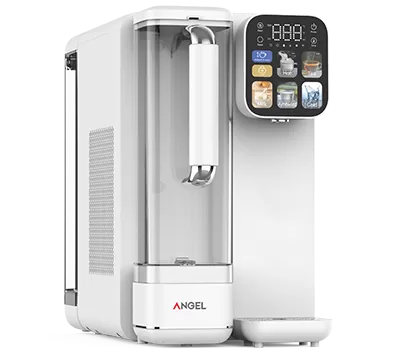
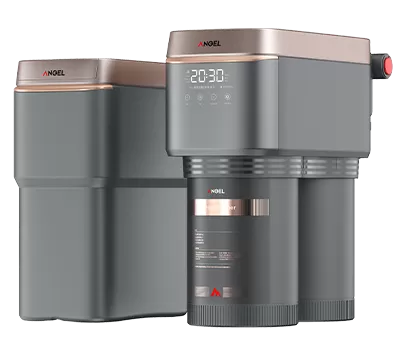
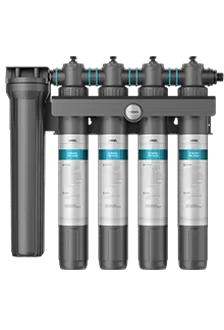
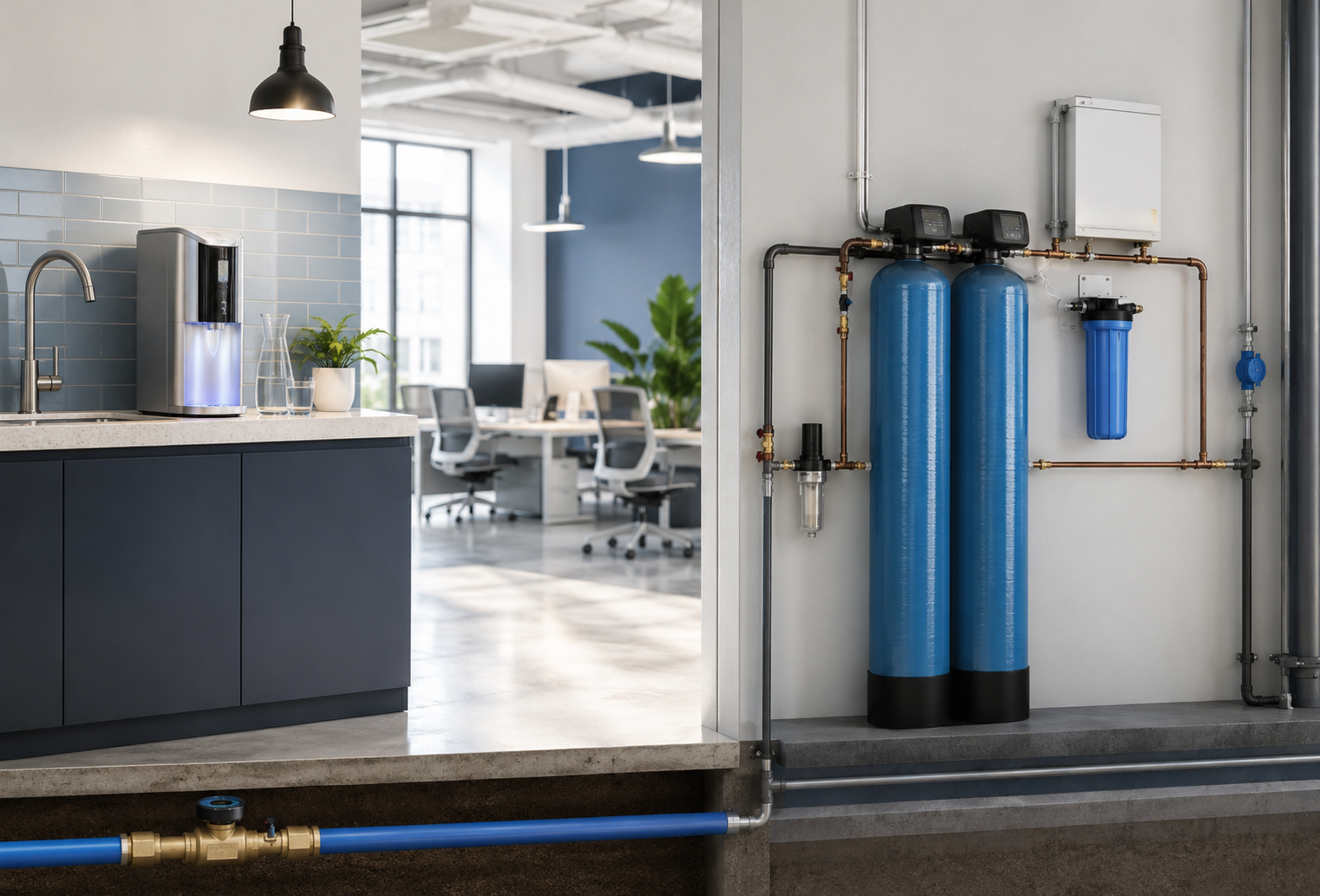
Under-sink water purifiers and countertop water purifiers both provide high-quality drinking water, but they address different spatial and usage issues. The under-sink system hides the purification system inside the cabinet and supplies water through a faucet; the countertop system places the water outlet function on the countertop and may also provide instant hot, cold, and sparkling water functions.
The comparison between under-sink and countertop water purifiers depends on available space, plumbing conditions, daily needs, required water temperature functions, and specific water usage methods. This comparison is particularly applicable to compact kitchens, office pantries, meeting rooms, and small workplaces.
What are Under-Sink and Countertop Water Purifiers
Under-sink water systems are usually installed inside cabinets or below the sink. The device connects to tap water and supplies water through a dedicated faucet. Tankless RO designs can continuously provide purified water while saving countertop space.
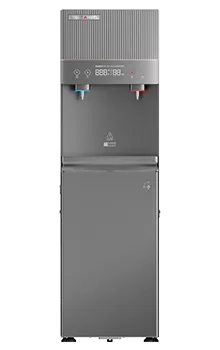
Countertop water dispensers or countertop water purifiers typically have the operation interface and water outlet set on the countertop. Some models use refillable water tanks and do not require fixed plumbing; other models connect directly to tap water. Countertop devices can also combine purification with heating, cooling, quantitative water dispensing, or other drinking water functions.
Main Differences between Under-Sink and Countertop Water Purifiers
Decision Factors | Under-Sink Water Purifier | Countertop Water Purifier |
Counter Space | Keeps countertop tidy | Requires suitable countertop location |
Cabinet Space | Requires installation space under the sink | Usually does not occupy cabinet space |
Installation Method | Requires water connection and faucet installation | Tank models may not require plumbing; direct connect models still need water connection |
Water Outlet Method | Usually through a dedicated faucet | Device-integrated water outlet |
Water Temperature Functions | Usually provides room temperature purified water | Can integrate hot, cold, or other functions |
More Suitable for | Fixed kitchen or pantry installation | Flexibility in water outlet and temperature convenience needs |
Which is More Suitable for Kitchens and Small Offices
When countertop space is limited, installation position is fixed, and users mainly need purified water at the sink, an under-sink drinking water purifier can be chosen. Angel's tankless models emphasize compact installation and high-flow RO water output, and some products also support dual water outlets or split installation.
When hot water, cold water, quantitative water dispensing, or flexibility without fixed plumbing is more important, a countertop water purifier can be selected. For example, a small office pantry that needs one device to meet both tea-making hot water and cold water needs can consider a countertop solution, but it is necessary to confirm whether the countertop space and water tank refill frequency are suitable for actual usage.
How to Compare Flow Rate, Filtration Capacity, and Installation Space
· Measure the exact dimensions of the cabinet or countertop and reserve space for maintenance.
· Estimate peak water usage, not just daily total water usage.
· Confirm whether a dedicated faucet hole can be added.
· Check the inlet pressure and electrical conditions required by the RO system.
· Determine whether room temperature water is sufficient or if hot and cold water functions are needed.
· Compare rated purification capacity and subsequent filter replacement workload.
There is a significant difference in water usage needs between office environments and home kitchens. Small offices are suitable for countertop water purifiers, which are flexible in installation and convenient to deploy; home kitchens have stable drinking and cooking water needs, and under-sink water purifiers can better integrate into the kitchen layout. Choosing a water purification device depends on matching one's actual usage pattern.
A Practical Example: Dual Outlet Under-Sink RO Water Purifier
Some users want to set up a high-flow filtered water outlet for cleaning or cooking, while also having a purified water outlet for direct drinking. The A7 SE Dual Outlet RO Water Purifier is designed around this separate water usage method, providing filtered and purified water through different water routes while keeping the main unit under the sink.
Maintenance and Filter Replacement Costs
Maintenance costs are influenced by raw water quality, filter price, total capacity, sanitation requirements, and maintenance convenience. Under-sink filters are not easily visible daily, so replacement reminders are more necessary, such as reminders on the faucet or the device body; countertop devices require not only filter replacement but also regular cleaning of the raw water tank and water outlet area.
Do not only compare purchase prices, but also consider installation fees, total filter costs, replacement frequency, water usage, power consumption, technical personnel operation space, and the time employees need for refilling or cleaning.
Frequently Asked Questions about Under-Sink and Countertop Water Purifiers
Which One Saves More Space?
Under-sink systems save countertop space but occupy cabinet space; countertop systems keep cabinet space free but require countertop space.
Do All Countertop Water Purifiers Require No Installation?
No. Tank models do not require fixed plumbing, but direct connect models need installation to connect to the water source.
Which is More Suitable for Small Offices?
It depends on peak demand, pantry layout, and water temperature requirements. Small teams may prefer countertop devices with hot and cold integration, while fixed pantries can use high-flow under-sink systems for stable water supply.
Can Under-Sink RO Systems Provide High Flow?
Yes. Tankless models have various water production capacities and should be selected based on the required flow rate and on-site inlet conditions.
 NORTH AMERICA
 Thailand
  Indonesia