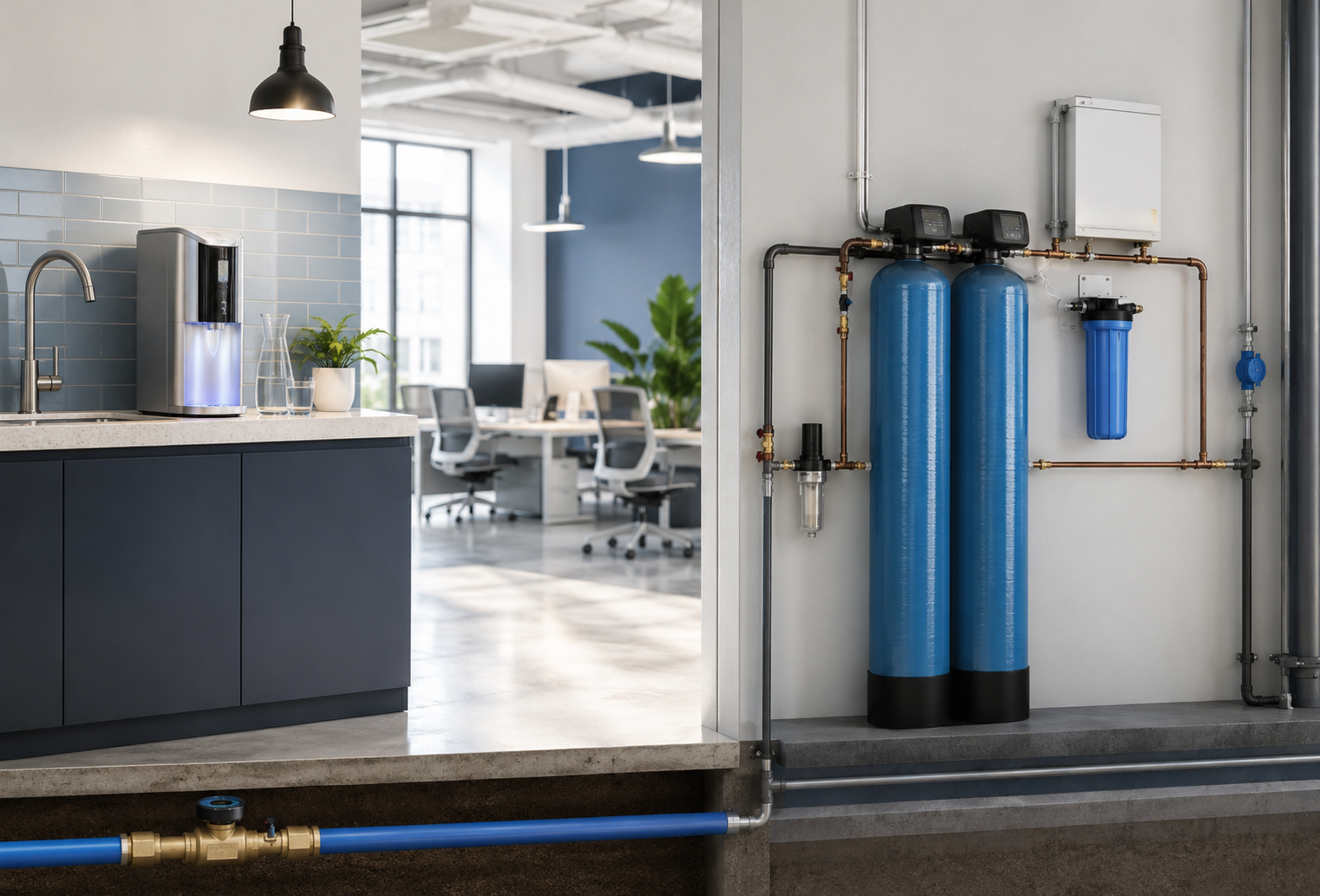
A commercial water purifier (water filtration system for business) can be installed at the point of use, or at the water inlet of a building or service area.
These two approaches—point-of-use purification (Point-of-Use, POU) and point-of-entry purification (Point-of-Entry, POE)—address different problems.
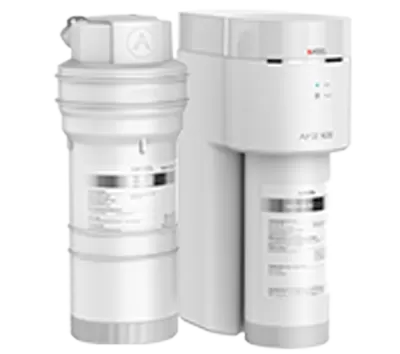
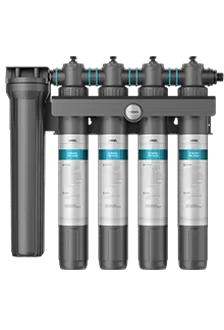
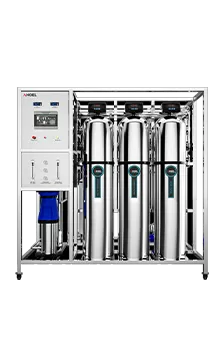
POE refers to a point-of-entry pre-treatment water purification system installed on the main incoming water pipe of a building. All tap water entering the building is first treated by this system before being distributed to various faucets and water-using equipment. POE is generally used for basic water pre-treatment for an entire home or building. Common types include pre-filters and central activated carbon filters. It mainly addresses building-wide issues such as sediment, residual chlorine, and water hardness, helping protect pipes, water boilers, and other water-using equipment while reducing scaling and wear in pipelines and equipment.
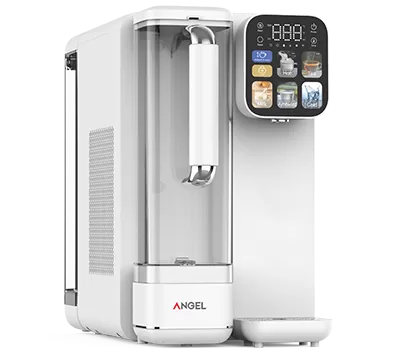
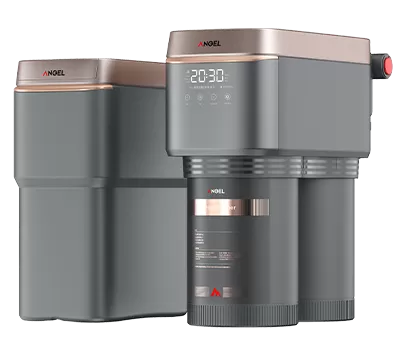
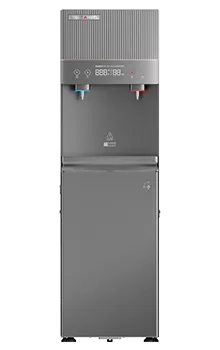
POU refers to a point-of-use water purification system installed near the final water outlet, such as under a kitchen sink, at the water inlet of a coffee machine, or at an office drinking water point. It provides deep purification only for that specific outlet. Common under-sink tankless RO systems, countertop drinking water purifiers, and single-faucet filters are all POU solutions.
POU can use high-precision filtration technologies such as RO reverse osmosis to effectively remove harmful substances such as heavy metals, bacteria, viruses, and residual chlorine from water. It precisely supports water needs with high quality requirements, such as direct drinking, cooking, and coffee preparation. Its advantages include flexible deployment, limited renovation work, and controllable costs; it can be implemented in rental homes, small cafés, and independent offices, and different points can be configured with different filtration levels independently.
In many commercial scenarios, the optimal solution is not choosing one or the other, but using POE + POU together: first use POE pre-filtration to reduce overall water hardness and filter out large particles, protecting the entire piping system and large equipment; then add POU purification at key points such as drinking water faucets to obtain stable, controllable, and clean drinking or process water, balancing equipment protection with outlet water quality.
What is the difference between point-of-entry purification (POE), point-of-use purification (POU), and water treatment?
A POE treatment system is installed upstream, for example:
It can reduce certain water quality issues in the overall water supply before the water is distributed to multiple downstream outlets.
Because it handles a larger water flow, the following become more important:
Equipment selection;
Pressure loss;
Maintenance planning;
all become more important.
A POU treatment system is installed close to the final point of water use.
Typical examples include:
When only a limited number of outlets require higher-quality water, POU is a practical solution.
A commercial water filtration system (water filtration system for business) can be applied in different ways depending on project goals:
If the goal is targeted drinking water treatment, POU can be used;
If the goal is broader water supply treatment coverage, POE can be used.
When does a point-of-entry purification (POE) system make more sense?
POE becomes more attractive when the same water quality issue affects multiple downstream points of use.
For example:
Common sediment problems;
Hardness-related scaling issues;
The need to condition water before it reaches multiple pieces of equipment.
Because POE treats a broader range of the building water supply, system specifications must be determined based on the flow rate of that service area, not only on drinking water demand.
The following factors need to be carefully evaluated:
A POE system can reduce the need to repeatedly install the same treatment equipment at multiple outlets.
However, when specific drinking water quality or process water quality is required, it should not automatically replace POU purification.
When is point-of-use purification (POU) more suitable for businesses?
POU is usually the better choice when the following situations occur:
Only some outlets require purified drinking water;
Different areas have different water quality goals;
The business wants to avoid treating water uniformly when the same purification level is not needed.
Office drinking water is a good example.
An office filtered water dispenser can provide treated drinking water in a pantry or common area without requiring every faucet in the building to receive the same treatment.
ANGEL’s office solutions page also introduces flexible POU and POE approaches, reflecting how different office layouts may vary by floor and usage requirements.
POU can also simplify phased projects:
Businesses can start deployment at higher-priority water points and gradually expand as usage needs or budgets change.
What are the differences between POE and POU systems in terms of treatment scope, flow rate, and installation?
| Factor | Point-of-Entry Purification (POE) | Point-of-Use Purification (POU) |
| Installation location | At the water inlet of the building or service area | Near the final outlet or equipment |
| Water supply coverage | Multiple water outlets | Designated water points |
| Installation method | Requires more integration with the building piping system | Local installation |
| Maintenance strategy | Fewer systems, but downtime may affect a wider area | Requires tracking multiple smaller service points |
| Best suited scenarios | Large factories, complexes, and large-scale chain projects that require unified purified water supply across the entire piping system | Office drinking stations, cafeteria direct-drinking points, and other locations with higher water quality requirements |
This comparison shows that:
A commercial filtration system (water filter system for business) cannot be selected based only on rated capacity.
The capacities of POU and POE represent different service scopes.
For example:
A 10 L/min POU requirement,
and a 20 L/min POE requirement,
may represent completely different situations under actual operating conditions.
How should POU or POE be selected for different commercial sites?
First, a simple question needs to be answered:
Does the water quality issue affect only drinking water or process water outlets?
Or does it affect the entire building water supply system?
If the issue is limited to drinking water quality, POU can usually provide a more precise solution.
If the same issue affects multiple pieces of equipment or water-using facilities, POE should be evaluated.
For broader projects, ANGEL’s water system solutions cover:
Coffee shops;
Restaurants;
Offices;
Public places;
Commercial agriculture.
This allows customers to compare different water treatment architectures based on application scenarios.
In terms of equipment selection, the commercial water purifier (water purifier for business) range includes:
Foodservice filtration systems;
Bottleless drinking water equipment;
Other commercial water treatment solutions.
A site survey should record:
These details often determine whether a theoretically suitable architecture is truly suitable for installation.
When comparing water purification systems for business, it is also necessary to distinguish between:
A single device,
and the system architecture of the entire site.
A single water purifier machine for business may be enough to meet the needs of one pantry;
while a larger drinking water system for business may use:
Can point-of-use purification (POU) and point-of-entry purification (POE) systems be used together?
Yes.
When a building has broad water quality issues while only a small number of outlets require additional purification, a combined design may be the most efficient approach.
POE can handle:
POU can then serve as the final treatment stage for:
Drinking water;
Specific process needs.
This layered treatment approach avoids treating every liter of water in the building to the highest level.
At the same time, it also allows different POU devices to be selected according to the needs of different outlets.
When combining systems, make sure that:
The goal should be to create a coordinated treatment process, not simply stack multiple unrelated devices together.
Summary
POU is best suited for:
Purification needs at specific outlets;
POE is best suited for:
Scenarios where common water quality issues need to be addressed across a broader water supply.
Many commercial sites are actually well suited to using both together.
The right system architecture should be based on:
Analysis of water quality issues;
Outlet water requirements;
Flow requirements;
Maintenance responsibilities;
before equipment is selected.
For business water treatment projects, please provide ANGEL with:
This information can help support a more practical discussion of:
POU, POE, or combined design solutions.
Commercial Water Filtration System FAQ
Is POU always cheaper than POE?
Not necessarily.
Cost depends on:
Multiple independent POU devices may also lead to higher lifecycle costs.
Can POE provide drinking water purification for an entire building?
It can treat the water supply entering the building.
However, whether the final water quality meets the target drinking water standard depends on the selected technology;
When should a business use POU and POE together?
When:
A water quality issue affects the entire building,
but some outlets require additional purification,
a combined design can be considered.
What information is needed to choose POU or POE?
You need to provide:
 NORTH AMERICA
 Thailand
  Indonesia