For a B2B project, selecting water purification manufacturers should be treated as a supplier qualification evaluation process, rather than a simple comparison of product prices.
The equipment must match the actual water source, the actual application scenario, and the actual maintenance environment.
A supplier that can sell filtration equipment but cannot translate site conditions into an executable water treatment solution may continue to create problems long after the purchase order has been signed.
A reliable evaluation process should follow this order:
Application-based solution capabilities;
Relevant project experience;
Product quality and core technology;
Project delivery and after-sales support;
Basic qualifications and production capacity.
This order ensures that the discussion always focuses on:
whether the manufacturer can truly solve the project problem,
rather than comparing company size or marketing claims too early.
Can the manufacturer provide scenario-based customized water treatment solutions?
First, you need to understand how the supplier analyzes application requirements.
A capable water treatment solution company should proactively understand the following before recommending equipment:
Be cautious when every inquiry receives the same configuration proposal.
Even if the daily water consumption appears similar, restaurants, offices, agricultural projects, and public facilities may have completely different treatment objectives.
ANGEL organizes its water filtration system solutions (water filtration system solutions) according to application scenarios, including:
Coffee shops;
Restaurants;
Offices;
Public places;
Commercial agriculture.
This application-based structure is one type of evidence buyers can refer to when judging whether a manufacturer truly considers application scenarios instead of focusing only on product models.
Does the manufacturer have relevant industry project experience and mature case studies?
The next step is to confirm whether the manufacturer has previously carried out projects in similar environments.
The goal is not simply to collect well-known customer logos.
More importantly, you should look for whether the supplier understands common operational issues in the industry, such as:
Ask the supplier to provide:
A valuable case study should show:
how the system was applied,
rather than merely stating that:
a certain piece of equipment has been installed.
This is also the difference between an ordinary water purifier supplier and a project partner.
A project partner should be able to explain:
How strong are the product quality and core water treatment technologies?
B2B buyers should evaluate the manufacturer’s technology portfolio instead of assuming that one filtration method can apply to all projects.
Different technologies solve different problems:
A supplier that can compare multiple treatment paths is more capable of avoiding:
Over-treatment;
Under-treatment.
For commercial projects, focus on:
If the proposal includes a commercial water purifier, ask:
what specific water quality issue each treatment stage addresses,
and what performance assumptions are being used.
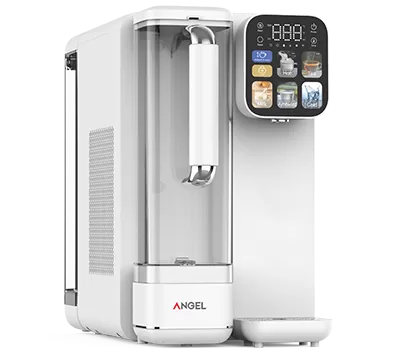
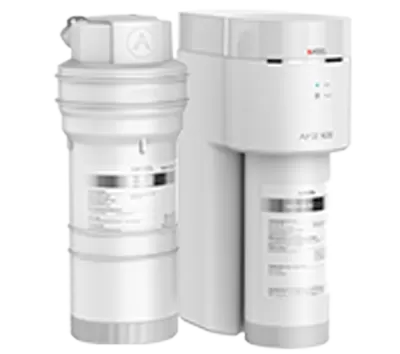
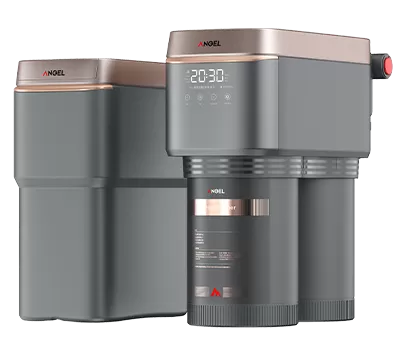
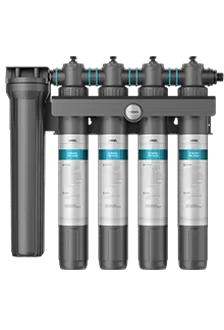
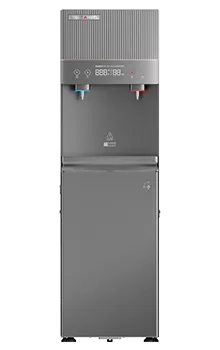
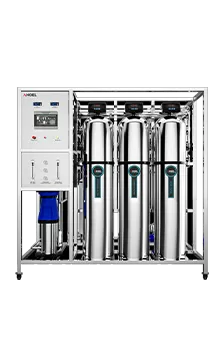
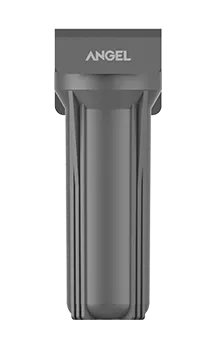
ANGEL’s commercial product portfolio includes:
Foodservice filtration systems;
Bottleless drinking water equipment;
Agricultural/industrial purification systems.
At the same time, it provides MF, UF, and RO products within a broader commercial product range.
Buyers can review these commercial water purifier solutions to evaluate the manufacturer’s technology coverage.
If the project relies heavily on membrane treatment technology, then an RO water purifier manufacturer should also be able to explain:
| Evaluation factor | What B2B buyers should verify | Warning signs |
|---|
| Customized solution capability | The supplier asks for water quality, application, and site data before proposing equipment | The same standard configuration is recommended for every project |
| Industry experience | Case studies show the problem, design logic, and operating environment | Only brand logos or general customer reviews are provided |
| Technology and quality | Multiple relevant treatment technologies are available, with clear operating parameters | Technology selection is mainly based on marketing terms |
| Delivery and after-sales service | Clear project communication, commissioning/service responsibilities, and spare parts plans are in place | Support after shipment is unclear |
| Production capacity | Manufacturing scale, quality processes, and scalable supply capability can be verified | Capacity claims cannot be proven |
Can the manufacturer support project delivery, on-site implementation, and after-sales maintenance?
Project execution is an area easily overlooked in many supplier evaluations.
Clarify:
Who is responsible for confirming the final configuration;
Who is responsible for reviewing installation conditions;
What technical documents will be provided;
Who is responsible for commissioning support.
For multi-location projects, also ask:
How product versions are managed;
How spare parts are controlled;
How service records are maintained.
After-sales support should also be specific and clear.
“We provide service” is not enough.
Buyers should understand:
How filter replacement is managed;
What troubleshooting information is provided;
How spare parts are supplied;
What response method is used when system performance changes.
If the project is international, clarify:
which services are handled by the manufacturer,
and which services are handled by local partners.
This helps avoid gaps between factory support and on-site responsibility.
What basic qualifications and production capabilities should B2B buyers verify?
Only after solution capability and service capability have been confirmed should buyers further evaluate company strength and manufacturing capability.
Review:
ANGEL’s water purification manufacturer profile shows that the group was founded in 1987 and operates manufacturing bases in China and Malaysia.
This type of information is useful because buyers can verify it through the supplier’s own company profile instead of accepting unsupported sales claims.
For large projects, you should further understand:
A supplier may have strong technical capabilities, but if it cannot support the project delivery schedule or product lifecycle management, it may still not be the right choice.
Conclusion
The most effective way to evaluate a reliable water treatment supplier is to start with the project problem and then proceed step by step:
Solution capability;
Similar project experience;
Technology and quality;
Delivery support;
After-sales service;
Company qualifications and production scale.
When requesting a project proposal from ANGEL, please provide:
The more complete the project requirements description is, the easier it becomes to judge:
whether the proposed solution,
and the manufacturer behind the solution,
truly meet B2B project requirements.
Water Purification Manufacturer FAQ
What should I ask a water purification manufacturer first?
First ask how they evaluate the following before selecting products:
Water source;
Application scenario;
Flow rate requirements;
Site limitations.
Is a large factory enough to prove that a supplier is suitable?
No.
Manufacturing scale is important,
but it only has practical significance after the supplier proves that it has suitable:
Solution capability;
Technical capability;
Delivery capability;
Service capability;
Only then does scale truly matter.
How can I verify a supplier’s project experience?
Ask for case studies that show the following:
Application scenario;
Water quality issue;
Treatment method;
Operating environment.
Not just customer names.
Should B2B buyers directly compare equipment prices?
Only after the specifications and service scope have been aligned.
If:
Treatment objectives differ;
System capabilities differ;
Support responsibilities differ;
then a lower-priced system may not be truly comparable.
 NORTH AMERICA
 Thailand
  Indonesia