When a business needs stricter control over purified water quality than basic particulate filtration or ultrafiltration can provide, a commercial reverse osmosis system offers significant application value. RO reverse osmosis can reduce many dissolved substances and other contaminants, but it also introduces design considerations such as pretreatment, membrane performance, concentrate discharge, pressure, and maintenance requirements.
Therefore, “commercial” does not simply mean installing a larger household RO unit.
The practical selection method is to compare the feedwater conditions with the required product water quality.
If the target water quality can be achieved with simpler filtration methods, RO may add unnecessary complexity.
If the application requires lower dissolved solids, more stable water chemistry, or a higher level of purification, properly engineered commercial RO water purifiers may be the more suitable choice.
What Is a Commercial Reverse Osmosis System?
Reverse osmosis technology uses pressure to push water through a selective membrane.
Depending on the membrane type, feedwater conditions, and operating conditions, this process can reduce:
Commercial systems are configured based on the following factors:
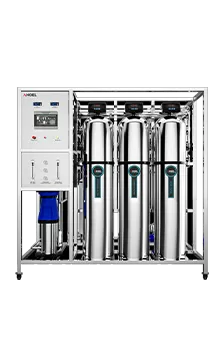
The concept of commercial reverse osmosis covers many different designs, ranging from food service systems to large multi-membrane configurations.
The important point is:
Membrane area and operating conditions must match the actual application requirements, rather than being selected simply according to a formula based on the number of users.
When Is RO the Right Choice for a Business?
RO is worth considering when the following conditions exist:
the inlet water has high or highly variable dissolved solids;
the application requires more controlled product water quality;
specific equipment or beverage standards require stricter water quality parameters.
RO is also very useful when a business wants to establish a consistent purified water base and adjust it according to different process requirements.
Food and beverage projects are a common example.
For example, when purchasers compare commercial food service water filtration solutions, they may choose MF or UF for certain high-flow applications, while selecting RO for coffee, beverages, or other applications that require more precise water quality control.
The final decision should be based on:
rather than assuming that RO is automatically the “best” technology.
When Might RO Exceed the Actual Needs of Your Application?
If the main issues are:
then other filtration methods may solve the problem with less complexity.
RO also produces concentrate discharge, requires suitable drainage conditions, and usually needs more stringent pretreatment than simple filtration.
For sites where the main need is improving drinking water taste or controlling particulates, adding RO without a clear water quality requirement may increase maintenance demands without delivering obvious operational benefits.
Therefore, a commercial RO water filtration system should be selected based on clear product water targets.
This is especially important in multi-use facilities, because not every outlet requires RO-grade water.
A split-flow design can maintain higher flow for general uses while applying RO to the points of use that truly benefit from it.
How Does Water Quality Affect Commercial RO System Design?
Inlet water quality determines many key factors in system design.
The following factors can all affect pretreatment methods or operating conditions:
Water quality that may cause membrane:
fouling;
scaling;
chemical damage;
may require additional protection before entering the RO stage.
Therefore, designers should review the water quality report before determining the membrane configuration.
Raw water temperature is also important because membrane output changes with operating conditions.
This is why the production capacity shown on the equipment nameplate must be understood together with its stated conditions.
For purchasers, an effective proposal should explain:
what pretreatment measures are included;
what inlet water assumptions are used;
how these assumptions affect the expected production capacity of the commercial reverse osmosis water filtration system.
Therefore, a commercial reverse osmosis water filter system should clearly document both:
How Do RO Membrane Configuration and Membrane Flux Affect System Output?
RO production capacity mainly depends on:
Increasing membrane area can improve potential output, while excessively high membrane flux may increase fouling risk and shorten cleaning intervals.
The right balance depends on:
Therefore, it is inaccurate to determine RO production capacity only based on the number of employees or average daily water consumption.
These figures can help define demand, but the system’s actual capacity comes from an engineered membrane configuration.
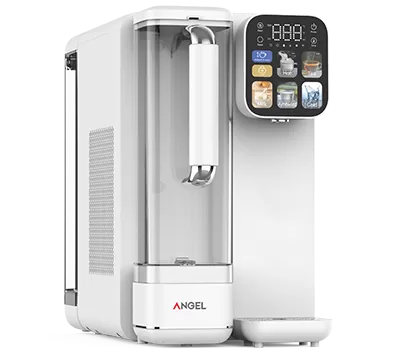
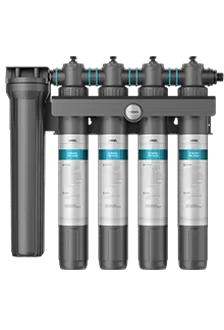
ANGEL’s commercial reverse osmosis system product range includes multiple commercial filtration technologies, and RO, MF, and UF can be comprehensively compared according to project operating conditions.
| Design Factor | Importance for Commercial RO |
|---|
| Inlet water quality | Determines pretreatment needs, fouling risk, and scaling risk |
| Membrane area and membrane flux | Strongly affects production capacity and operating pressure |
| Inlet pressure and temperature | Affects membrane performance and water output |
| Target product water quality | Determines whether RO is needed and how the system should be configured |
| Drainage / concentrate handling | Must meet the actual conditions of the installation site |
What Should Be Checked for Pretreatment, Drainage, and Routine Maintenance?
Commercial RO installations require a clear maintenance plan.
The following should be confirmed:
filter cartridge replacement;
membrane performance monitoring;
flushing;
sanitization;
regular cleaning requirements.
Ensure that:
filter cartridges;
membrane elements;
valves;
have safe and convenient maintenance space.
Do not install the system in a location where surrounding equipment must be removed for routine maintenance.
Drainage also needs to be included in the site assessment.
Concentrate lines and flushing or maintenance drainage must be:
If the application includes:
these components should also be included in the hygiene management plan.
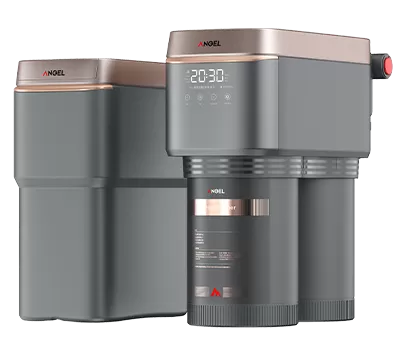
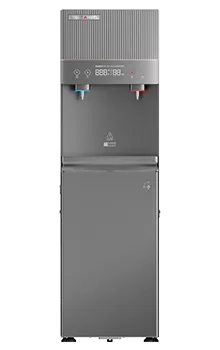
ANGEL’s water filter with TDS controller is an example of a commercial RO product. It can provide RO purification first and then controlled TDS adjustment for coffee water applications.
Summary
A business needs RO only when:
the water quality issue and target product water requirements truly require reverse osmosis technology, not simply because RO is considered more advanced.
Businesses should:
test the inlet water quality;
clarify application requirements;
define target product water quality;
design membrane area, membrane flux, pretreatment, and drainage solutions according to these requirements.
If you are planning a commercial RO project, please provide ANGEL with:
This allows the system solution to be discussed based on engineering requirements.
Commercial Reverse Osmosis System FAQ
Does Every Business Need RO Water Treatment?
No.
Many applications can be satisfied through:
to meet the requirements.
RO should only be selected when the target product water quality requires it.
What Determines the Output of a Commercial RO System?
The following factors all affect water output:
membrane area;
membrane flux;
inlet pressure;
temperature;
water quality;
system design.
Why Is Pretreatment Before RO Important?
Pretreatment can help reduce:
membrane fouling;
scaling;
chemical exposure;
all of which can affect membrane performance and service life.
Can a Commercial Facility Use Both RO and Non-RO Filtration?
Yes.
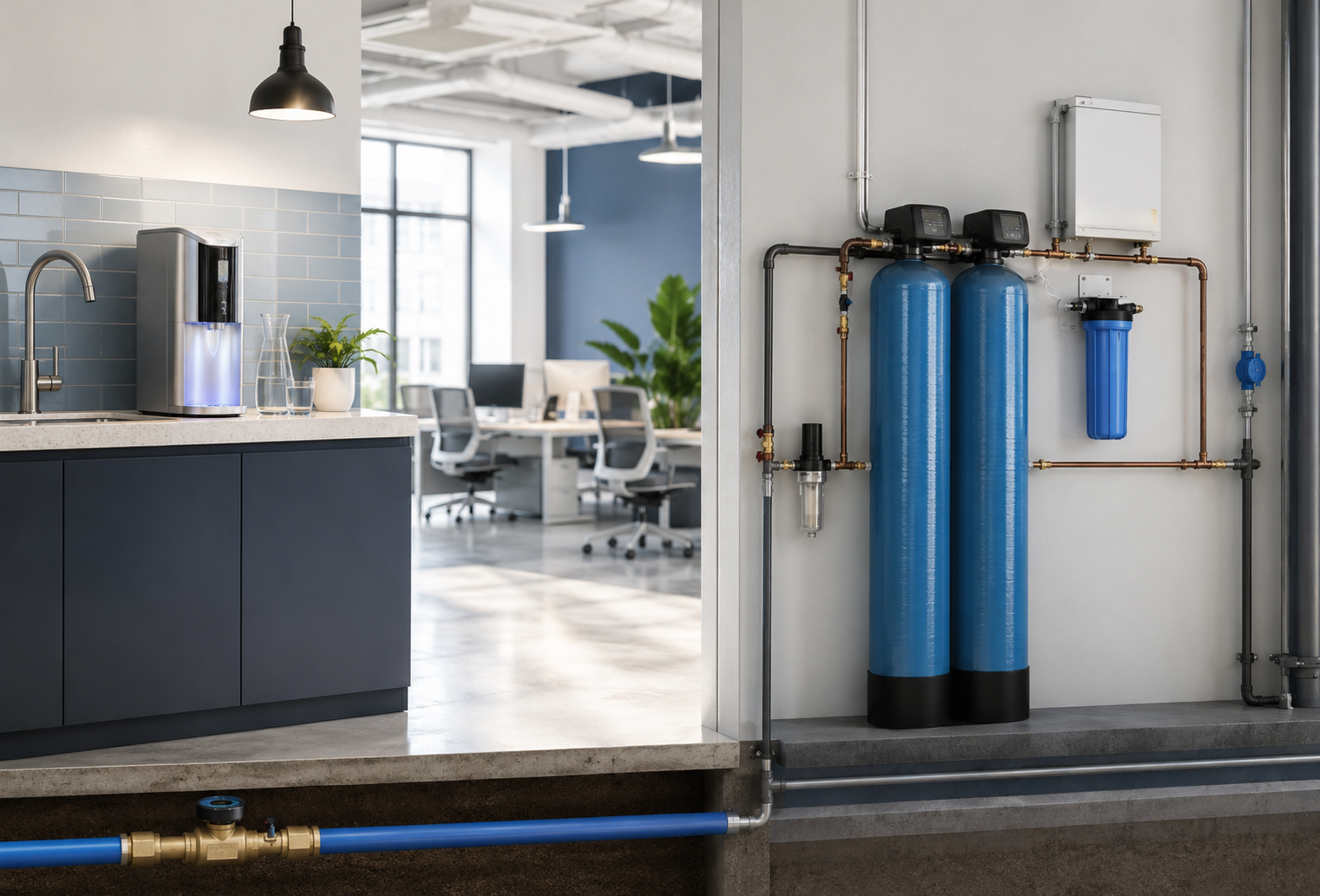
Different points of use may have different water quality and flow requirements, so a combined treatment architecture may be more efficient.
 NORTH AMERICA
 Thailand
  Indonesia