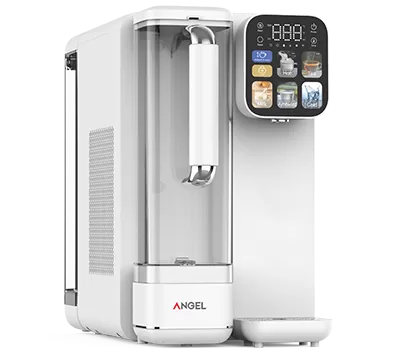
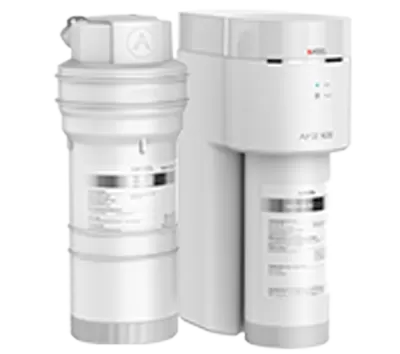
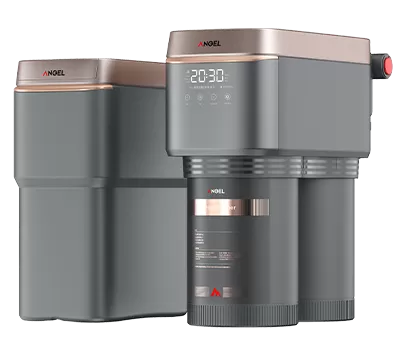
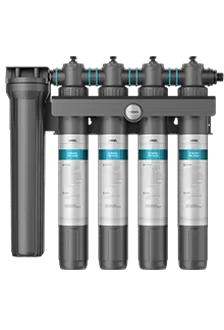
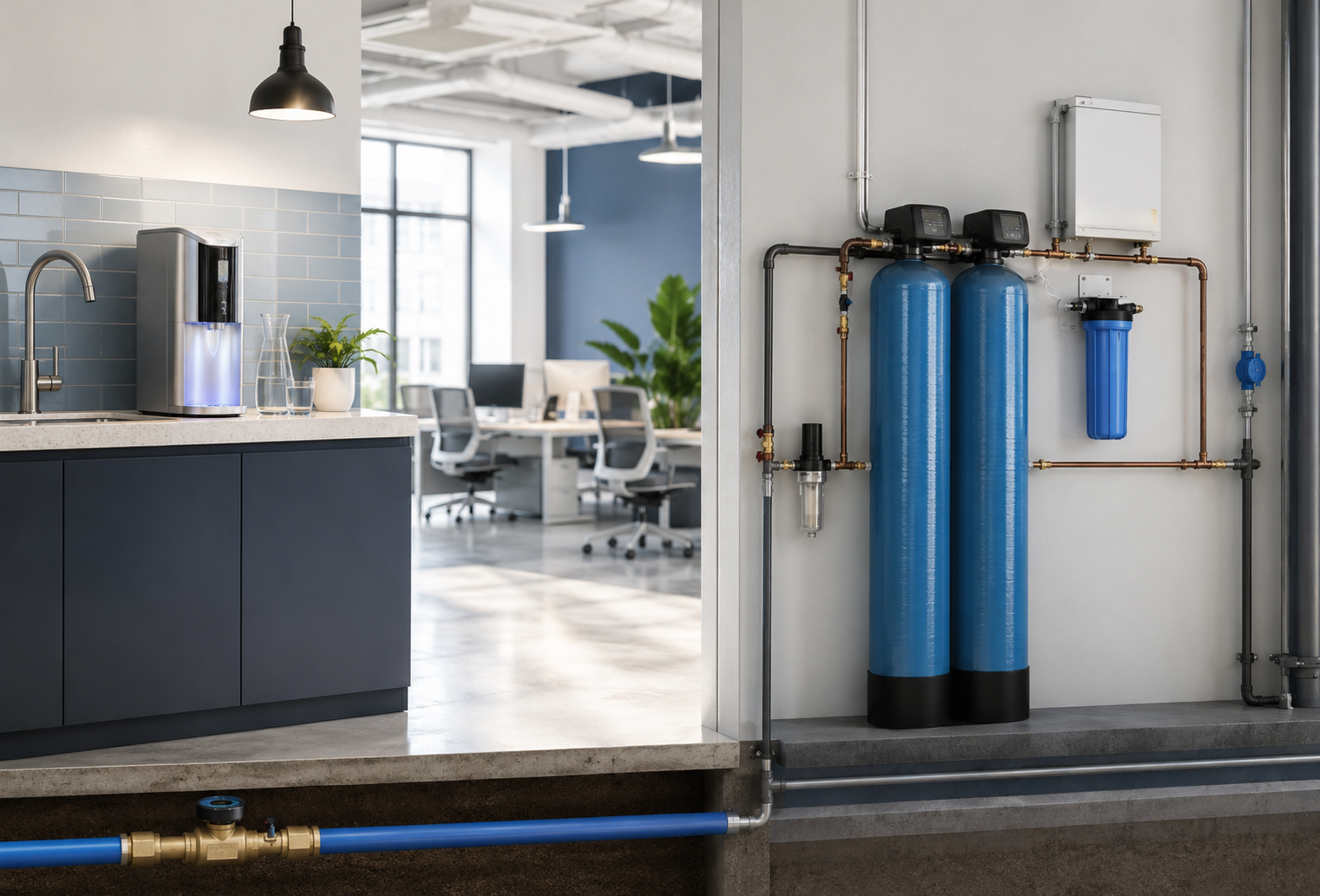
Choosing a commercial water filtration system starts with the application scenario, not a product catalog. The right system must address the water quality issues that matter on site, provide enough water when multiple outlets operate at the same time, fit existing utility conditions, and remain practical to maintain. Restaurants, coffee shops, offices, hotels, public facilities, or light commercial processing sites can all use filtered water, but they do not necessarily need the same treatment process.
Therefore, for buyers, the most useful question is not “Which filter is the largest?” but “What does the water in this site need to achieve?” Once the required water quality, points of use, and operating conditions are clear, it becomes much easier to compare a commercial water filtration system, select the right treatment technology, and prepare an RFQ that suppliers can respond to accurately.
What Should You Clarify Before Choosing a Commercial Water Filtration System?
First, break the project down into four decisions: water source, water-use tasks, treatment goals, and operating constraints. The water source tells you what enters the system; the application scenario tells you what must be treated out.
Municipal water supply may mainly require control of:
chlorine;
taste;
odor;
particulates;
hardness-related scale.
Other sites may face higher dissolved solids content, or more noticeable changes in the water source.
Treatment goals also vary depending on the outlet. Water used for drinking and beverage preparation is evaluated differently from water mainly used to protect steam equipment, ice machines, or other equipment.
This is why a commercial water purification system should be configured after reviewing a water quality report or on-site test results.
The same approach also helps buyers avoid over-treatment.
If the main issue is taste and odor, a full RO design may be unnecessary;
if the application requires stricter control of dissolved substances, simple filtration may not meet the requirements.
How to Choose a System Based on Commercial Applications: Drinking Water, Foodservice, Equipment Protection, and More
Commercial applications should be classified according to what the water needs to achieve.
For employee or visitor drinking water scenarios, priorities may include:
In foodservice, filtered water may be used for:
cooking;
beverage equipment;
ice machines;
other equipment.
Therefore, taste, scale control, and flow rate are all very important.
For example, when evaluating a restaurant water filtration system, a restaurant should first map every kitchen water-use point before deciding whether one treatment branch can serve multiple pieces of equipment.
Coffee shops may need more precise water quality control to meet the requirements of espresso and brewed coffee; ANGEL’s coffee shop water filtration solution is designed around beverage quality and equipment protection.
Therefore, the best commercial water filtration system is application-specific.
Even if two sites use a similar amount of water each day, they may still need different system designs if one prioritizes high-flow cooking water while the other requires controlled beverage water.
| Commercial Application | Typical Priorities | Selection Questions |
|---|
| Office / Workplace | Reliable drinking water | Where should purified water be supplied? What temperature options are needed? |
| HoReCa | Taste, equipment protection, multiple points of use | Which outlets need filtration, scale control, or higher purification? |
| Coffee shop | Beverage consistency and equipment protection | Does coffee preparation require stricter control of minerals/TDS? |
| Public facility | High-use reliability and maintainability | Can the system handle long operating hours and be maintained easily in practice? |
How to Size a Commercial System for Multiple Simultaneous Points of Use?
Do not size a project based only on average daily water consumption.
Commercial demand often occurs intensively within short time periods.
An office pantry may be quiet most of the time, but during breaks it may experience heavy water use.
A restaurant may operate the following at the same time:
ice production;
cooking;
beverage service.
A coffee shop may supply water during the same service period for:
espresso;
batch-brew coffee;
other beverages
.
List every filtered water outlet, estimate which outlets may operate at the same time, and record the required flow rate or equipment inlet specifications for each outlet.
Then compare these requirements with the rated performance of the proposed system.
When a commercial water purifier includes dispensing functions, storage, heating, or cooling capacity may also be very important.
A reasonable design should also allow room for operational changes instead of automatically oversizing the entire project.
The goal is stable service under real peak conditions, not choosing the largest possible specification.
How to Compare Filtration Technologies for Different Commercial Water Quality Issues?
Technology selection should follow the water quality issue.
Sediment filtration or microfiltration can reduce suspended particles and support downstream equipment operation.
Activated carbon is commonly used to:
control chlorine;
improve taste;
remove odors.
Ultrafiltration can provide a finer physical barrier while retaining most dissolved minerals.
Reverse osmosis is a suitable choice when a project requires stronger removal of dissolved substances and more controlled purified water quality.
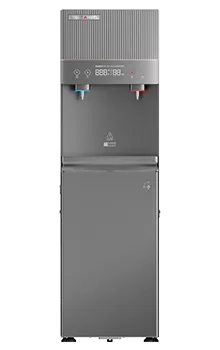
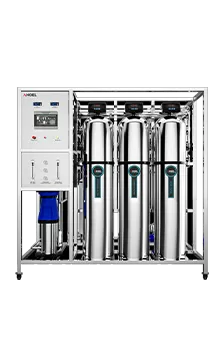
ANGEL integrates MF, UF, and RO solutions within its commercial water filtration system product range, making it easier for customers to compare technology options based on application scenarios rather than brand names alone.
For buyers, this comparison should include not only filtration performance but also:
This helps avoid a common mistake:
choosing a technology simply because it sounds more advanced, rather than because it truly fits the actual commercial application.
Which Installation and Maintenance Conditions Need Attention in Commercial Sites?
Before making a final selection, confirm:
A technically suitable system may still not be a good project choice if:
then it may still not be a good project choice.
Maintenance planning should clearly define:
who is responsible for replacing filters;
how service life will be monitored;
how sanitation will be carried out;
what should be done if one treatment point is temporarily offline.
In multi-site projects, standardized maintenance records and approved replacement parts are as valuable as equipment standardization.
For continuously operating commercial scenarios, maintainability is part of performance.
It should be evaluated before purchase, not after the first filter replacement.
How to Prepare a Clear RFQ for a Commercial Water Filtration Project?
An effective RFQ should include:
water source report;
business type;
list of points of use;
required flow rate for each point of use;
expected operating hours;
available installation space;
inlet water pressure;
power and drainage conditions;
any equipment manufacturer requirements for water quality.
If possible, also add:
At the same time, clearly state the project goals:
improve drinking water quality;
enhance beverage consistency;
reduce scale;
protect equipment;
increase purification level;
or a combination of the above goals.
This gives suppliers enough information to recommend a system instead of guessing based on headcount or daily water consumption.
When comparing proposals, ask each supplier to explain:
why the selected technology is suitable for the application;
what design assumptions were used;
what routine maintenance is required.
In this way, different commercial water filtration proposals can be compared more easily on an equal basis.
Commercial water filtration is a site-based design decision, not the selection of a standard product suitable for all situations.
Before choosing equipment, you need to:
clarify water-use tasks;
verify the water source;
determine simultaneous water demand;
match treatment technology to the actual problem;
confirm maintenance space.
For project-specific recommendations, please provide ANGEL with:
water quality report;
application list;
required flow rates;
installation conditions.
The team can use this information to discuss practical configuration options instead of relying on generic capacity rules.
Commercial Water Filtration System FAQ
What Information Should I Provide Before Requesting a Quote?
Please provide:
water source data;
points of use;
required flow rates;
operating hours;
available space;
utility conditions;
water quality goals.
Is RO Always the Best Choice for Commercial Projects?
No.
RO is valuable when stronger dissolved substance control is needed, but for other application scenarios, MF or UF may be more suitable.
Should One Filtration System Serve All Outlets in a Building?
Not necessarily.
Different outlets may have different treatment goals, so separate branches or different treatment stages may be more practical.
 NORTH AMERICA
 Thailand
  Indonesia