In the modern catering industry, water is no longer just a basic operational resource but an important component that affects customer experience. From pre-meal drinking water, coffee, and tea, to ice making, cooking, and dishwashing, water quality directly influences customers' perception of the overall quality of a restaurant.
For this reason, more and more restaurants are shifting from traditional basic filtration methods to more stable and higher-standard centralized or semi-centralized water purification solutions, including multi-stage filtration such as reverse osmosis (RO) and ultrafiltration, microfiltration systems. These systems are more suitable for commercial scenarios like restaurants that need to maintain stable water quality output at multiple water points simultaneously.
Water Quality Directly Affects Customer Experience
Although customers usually do not directly see the restaurant's water supply system, they are always experiencing its results, such as:
The taste of drinking water
Flavor performance of coffee and tea
Clarity and stability of ice cubes
Cleanliness of dishes and glassware
Overall hygiene level of water used in the kitchen
In the catering industry, water is an "invisible but perceptible" quality factor. It not only affects the final flavor of drinks and dishes but also the operational status of equipment, thus it is gradually being incorporated into the core operational standards of restaurants.
Why Basic Filtration No Longer Meets Restaurant Needs
Many traditional restaurants still use simple sediment filtration or activated carbon filtration systems. Although these systems can improve taste and reduce chlorine odor, they have obvious limitations:
Unable to effectively remove dissolved pollutants
Limited ability to control scale and hardness
Insufficient stability in high-frequency water usage environments
Difficult to support multiple water endpoints operating simultaneously
Modern restaurants typically operate beverage bars, kitchen preparation, dishwashing equipment, and ice-making systems simultaneously, thus requiring more stable and consistent water supply rather than decentralized single-point filtration.
In this demand context, medium-sized commercial water purification systems are gradually becoming more suitable solutions for restaurants.
Centralized Water Supply: Structural Upgrading of Catering Outlets
The water usage scenarios in restaurants are not singular but a complex structure of multiple systems running in parallel, such as:
Due to the numerous and dispersed water points, single-terminal filtration equipment cannot ensure overall water quality consistency.
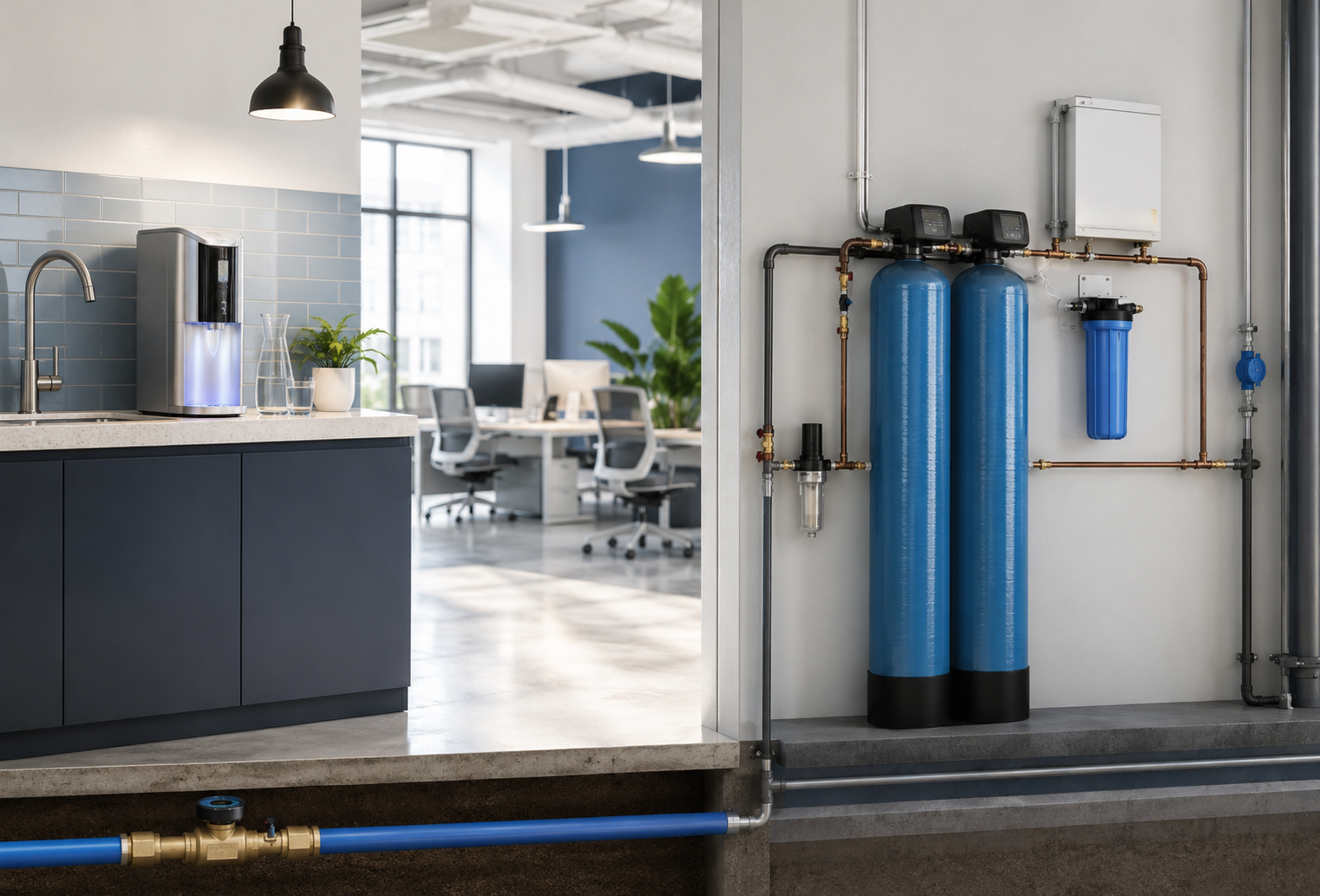
Therefore, more and more restaurants are beginning to adopt centralized or semi-centralized water purification systems to achieve unified water source treatment and multi-point distribution, ensuring consistent water standards in different areas.
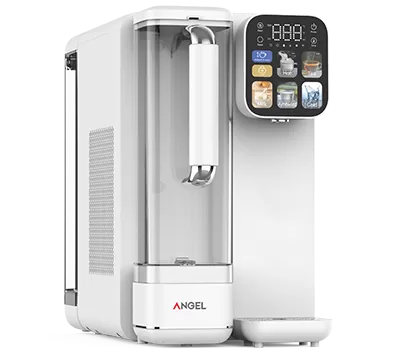
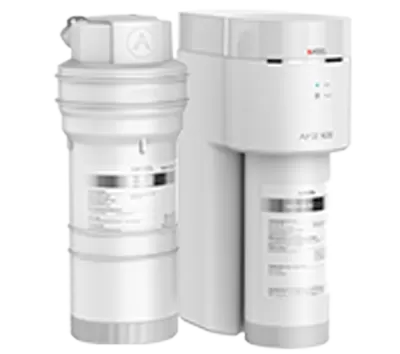
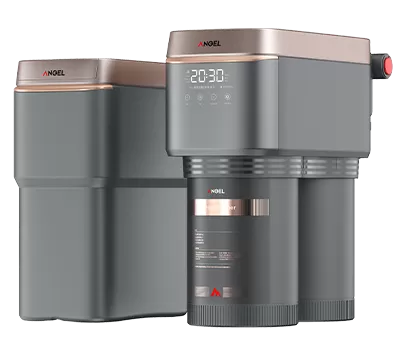
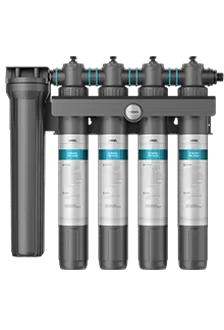
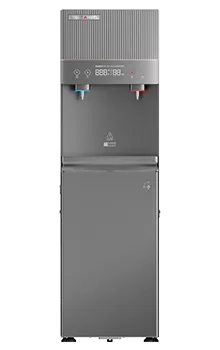
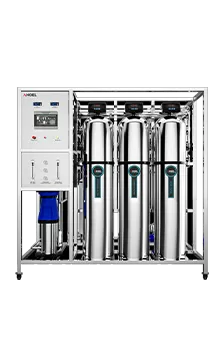
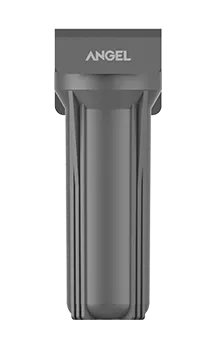
Angel commercial kitchen water purification system is designed for such catering scenarios, providing unified and stable water supply support for beverages, kitchens, and cleaning systems.
The Role of Reverse Osmosis Deep Purification in Catering
In restaurant water treatment systems, reverse osmosis technology is an important core to achieve high standards of water quality.
This technology can effectively remove:
In the catering environment, this is especially critical because water is not only used for drinking but also widely used for:
Through deep purification, the consistency of beverage flavors can be significantly improved, and the risk of equipment contamination can be reduced.
Why Commercial Water Purification Systems Suit Restaurant Scenarios
Medium-sized water purification systems for the catering industry usually have the following characteristics:
Support continuous and stable water output
Can adapt to moderate-scale water load
Multi-stage filtration structure ensures stable water quality
Suitable for unified water supply to multiple water endpoints
Unlike household under-sink or countertop water purifiers, these systems emphasize continuous operation capability and multi-point water supply capability, able to meet the concentrated water demand during peak times in restaurants.
Consistency of Drinking Water Has Become a Key Indicator of Restaurant Experience
In the modern catering industry, the quality of drinking water is gradually becoming part of the customer experience.
Customers are increasingly concerned about:
Whether the water is clear and odorless
Whether there is a chlorine or metallic taste
Whether water quality is consistent at different times and from different seats
Therefore, the drinking water system is no longer just a backend facility but an important factor affecting customer satisfaction.
A well-designed restaurant water purification system can ensure consistent water quality at each outlet, reducing experience differences.
Ice and Beverages: The Most Intuitive Reflection of Water Quality
Ice and beverages are the parts where customers can most easily perceive water quality differences.
Poor water quality may lead to:
High-quality filtration systems can reduce dissolved gases, minerals, and suspended matter in the water, thereby improving ice transparency and beverage stability, which is especially important in coffee shops and high-end restaurants.
Operational Efficiency and Equipment Protection
Water quality also directly affects the operational efficiency of restaurant equipment, such as:
Dishwashers and hot water equipment are prone to scaling
Decreased heating efficiency
Increased maintenance frequency
Increased energy consumption
Scale is mainly formed by hardness minerals such as calcium and magnesium.
By reducing dissolved solids and hardness in the water, water purification systems can effectively extend the lifespan of equipment, reduce maintenance costs, and improve overall operational efficiency.
Sustainable Development Trends
The catering industry is also gradually reducing its reliance on bottled water.
Centralized water purification systems can:
Reduce the use of bottled water
Reduce plastic waste
Optimize inventory and transportation
Improve environmental indicators
This is highly consistent with the green operation trend in the catering industry.
Maintenance and System Stability
Restaurant water purification systems require continuous maintenance, including:
Regular replacement of filters
System flow monitoring
Membrane performance checks
Regular cleaning and flushing
Continuous maintenance is key to ensuring stable water quality and long-term system operation. Lack of maintenance, even for advanced systems, may affect water supply quality and thereby impact customer experience.
Conclusion: Water Quality is Becoming Part of Restaurant Competitiveness
In the modern catering industry, restaurant quality is no longer determined solely by dishes, decor, or service; water quality is becoming an invisible infrastructure that affects the overall experience.
Traditional basic filtration can no longer meet the multi-scenario catering needs; instead, commercial water purification systems capable of supporting multi-endpoint, continuous water supply are taking its place.
Angel's restaurant water filter systems are designed to meet this growing demand, providing stable and consistent water quality support for beverages, kitchens, and cleaning operations.
Ultimately, water is not only an operational resource of a restaurant but also an important component of customer experience, equipment efficiency, and brand quality.
 NORTH AMERICA
 Thailand
  Indonesia