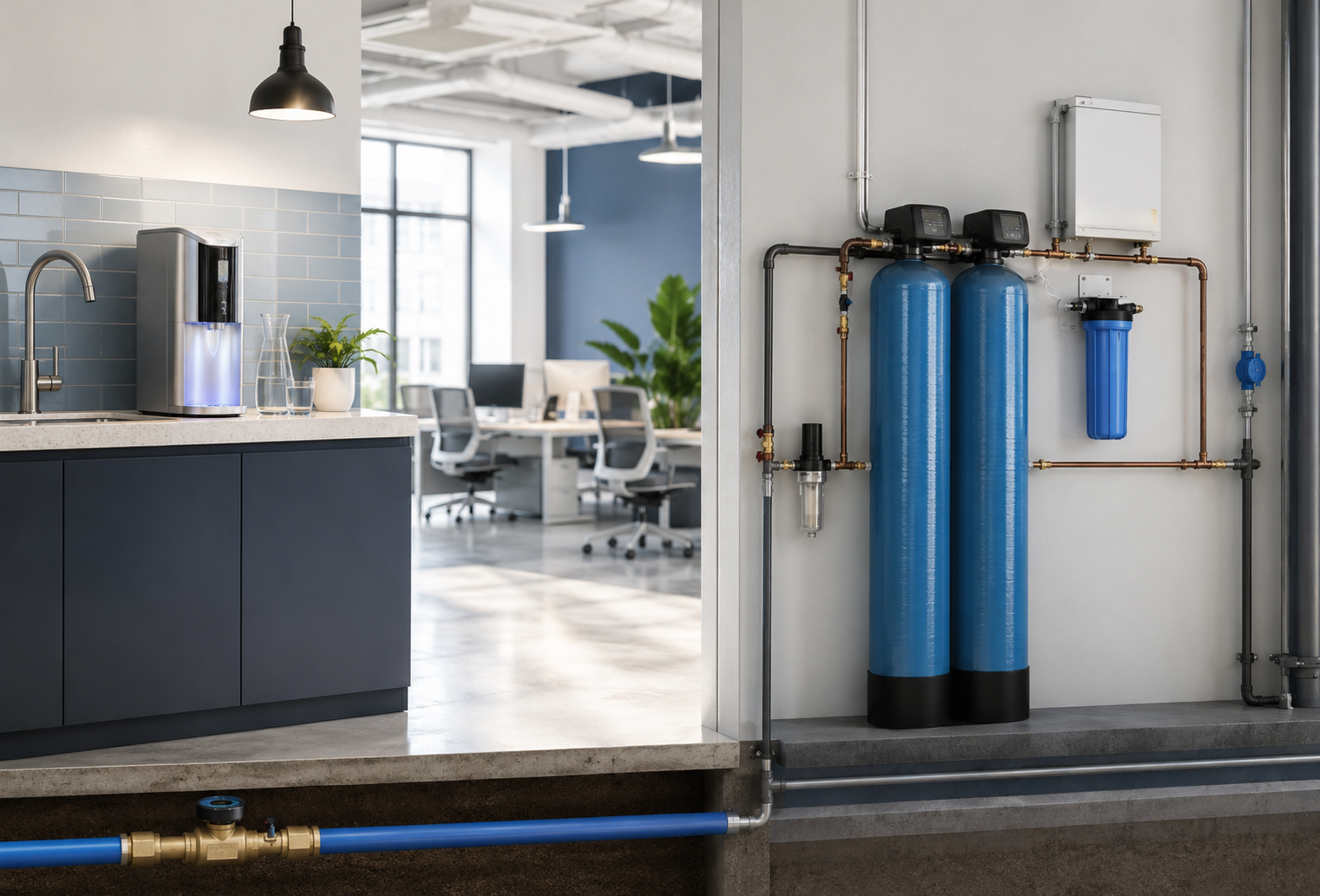
Traditional office drinking water often relies on bottled water delivery, storage space, and frequent bottle replacement. The bottleless drinking system adopts a different approach: it connects directly to the building's water pipeline, purifies on demand, and provides hot or cold water, eliminating the need to transport and store large bottles in office areas.
For administrative or facilities management teams, the choice is not just "bottled" or "bottleless." A suitable bottleless filtration drinking machine needs to provide sufficient purified water during peak break times, fit the installation location, meet the required water temperature, and be easy to replace filters and maintain. Therefore, commercial bottleless water dispensers should be evaluated based on peak-hour output, temperature capacity, installation conditions, and maintenance access.
What is a Bottleless Drinking Machine
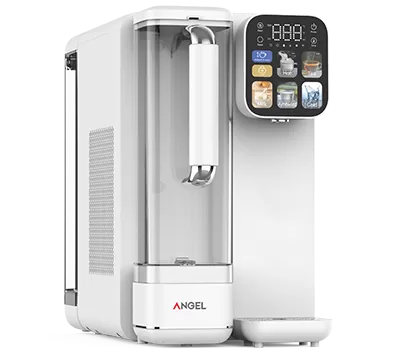
A bottleless drinking machine is a terminal drinking water device directly connected to tap water. The built-in filtration system processes incoming water before storage or dispensing. Depending on the model, the device can provide ambient, cold, or hot water and can further remove impurities from tap water through RO reverse osmosis.
Since the device can continuously receive water supply from the network, there is no need to arrange bottled water delivery or store full and empty bottles. For offices with stable daily water usage or limited storage space, a bottleless system is often easier to manage.
How Does a Bottleless RO Drinking Machine Work
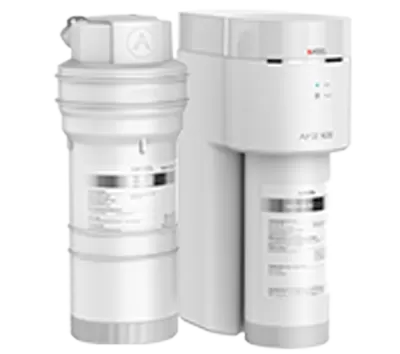
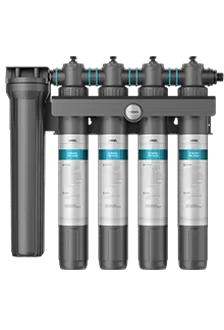
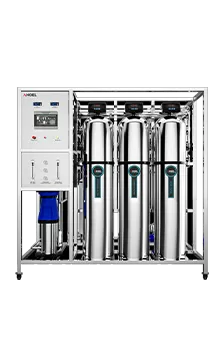
A bottleless RO drinking machine typically consists of pre-treatment filters, an RO membrane, and post-treatment stages. Pre-treatment reduces sediment and residual chlorine's impact on the RO membrane, the RO membrane reduces dissolved impurities, and treated water then enters the dispensing, heating, or cooling systems.
RO water production capacity is usually indicated by daily gallons, but selection should also consider heating capacity, cooling capacity, storage capacity, and instantaneous water dispensing performance.
Advantages of Using Bottleless RO Drinking Machines in Offices
· Reduces storage space occupied by full and empty water bottles.
· No need for employees to frequently transport and replace large water bottles.
· Directly utilizes building water supply to provide drinking water as needed.
· Focuses management on unified filter maintenance rather than repeatedly coordinating bottled water delivery.
· Can provide hot and cold water to meet daily drinking, tea-making, and other office needs.
· Can be deployed by floor and department to improve water dispensing convenience during peak hours.
For purchasers comparing office filtration drinking machines, these advantages can only truly be realized if the device capacity and maintenance plan are reasonable. Improper device location or insufficient capacity can cause queuing; if there is a lack of clear maintenance arrangements, device flow and water quality may decline over time.
Comparison Between Office Bottleless Drinking Machines and Bottled Water Dispensers
Comparison Item | Bottleless Drinking Machine | Bottled Water Dispenser |
Water Supply Method | Direct connection to building tap water | Relies on bottled water delivery |
| Water Freshness | Freshly made and consumed, no long-term storage, fresher water | Stored after opening, prone to microbial growth |
Storage Space | No need to reserve water bottles | Need to store full and empty bottles |
Daily Management | Filter and hygiene maintenance | Delivery, bottle replacement, and inventory management |
Long-term Use Cost | Initial investment, subsequent filter costs only, suitable for long-term use | Continuous repeat water purchase, higher total cost over time |
Installation Requirements | Requires suitable water and power connections | Usually only requires power |
How to Choose Capacity and Water Temperature Functions
When selecting an office bottleless drinking machine, one should not only consider the total number of employees but also working hours, mixed office attendance rates, tea room location, peak break times, visitor numbers, floor layout, and employees' actual use ratios of hot and cold water.
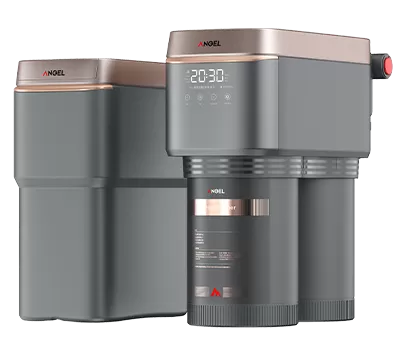
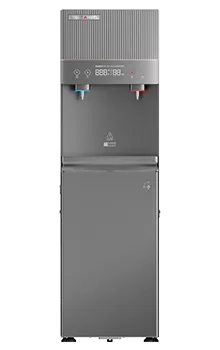
Angel offers upright RO drinking machines with different purification, heating, and cooling capacities. Actual solutions may involve configuring a higher capacity device in the central tea room, positioning several smaller devices near multiple teams, or adopting a mixed solution on different floors. Through Bottleless Drinking Machines, purchasers can compare different models' purification capacity, heating capacity, cooling capacity, purified water capacity, and size.
Preparations Before Installing a Bottleless RO Drinking Machine
· Prepare suitable water inlets and drainage points near the planned installation location.
· Prepare compatible power outlets and sufficient circuit capacity.
· Confirm that the water pressure meets the requirements of the corresponding model.
· Reserve enough floor area, ventilation, and maintenance space.
· Ensure pipelines can be safely laid to avoid tripping, water leakage, or hygiene risks.
Installation planning should also consider the operational space for technicians. Completely placing the equipment in a narrow corner may look tidy but can cause unnecessary difficulties for filter replacement and sanitation maintenance.
Filter Replacement and Daily Maintenance
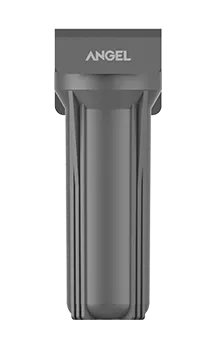
Filter replacement cannot simply follow a uniform calendar cycle; it should be comprehensively judged based on raw water quality, total water usage, filter capacity, and device monitoring system. Sediment load, exposure to residual chlorine, and high TDS may shorten filter life. Facilities management teams should keep maintenance records and follow specific model requirements.
Daily maintenance may include replacing filters, disinfecting areas in contact with water, cleaning the dispensing area, inspecting pipelines and joints, troubleshooting leaks, and confirming heating and cooling performance.
Office Drinking Machine Quantity and Deployment Planning: Contact ANGEL
The exact number of drinking machines needed in an office does not have a fixed answer applicable to all scenarios. Even if two companies have the same number of employees, differences in office area, attendance patterns, break times, and tea room accessibility can result in completely different needs.
Angel can assist in planning equipment quantity and deployment based on employee numbers, floors, working hours, peak demand, and required hot and cold water output. Purchasers needing to evaluate a complete office drinking water configuration can first view Angel's Office Water Dispensers and Solutions; then contact Angel for deployment advice.
FAQs About Bottleless RO Drinking Machines
Do Bottleless RO Drinking Machines Need to Connect to Water Pipes?
Yes. Bottleless RO drinking machines need to connect to tap water inlets, set up wastewater drainage points, and connect to power to produce water normally.
How Often Should RO Filters Be Replaced?
It should be based on raw water quality, water usage, filter capacity, and device reminders, following the maintenance cycle of the specific model instead of using a general time.
Does Every Floor in the Office Need to Install One?
Not necessarily. Deployment should be based on walking distance, peak queuing, floor population, and available water and electricity conditions.
Can Bottleless Drinking Machines Provide Both Hot and Cold Water?
Yes. Many commercial models have hot and cold water functions, but output capacity varies and needs to match actual needs.
 NORTH AMERICA
 Thailand
  Indonesia